How Paintless Dent Repair Saves Time and Helps Keep Original Factory Paint
A small dent can make a newer vehicle look tired overnight. One shopping cart in a parking lot, one door ding repair gone ignored, one brief hailstorm, and suddenly the eye goes straight to the damage every time you walk up to the car. What surprises many owners is that not every dent needs sanding, filler, primer, and repainting. In the right situation, paintless dent repair offers a faster and more conservative fix, one that can preserve the finish the vehicle left the factory with.
That last part matters more than people think. Original factory paint is hard to duplicate exactly. Even at a skilled auto body tonysautomotivecenter.com panel beating San Francisco shop, matching color, metallic flake, orange peel texture, and gloss level takes care and experience. Good shops do it well, but a repaint is still a repaint. When paintless dent removal is possible, the repair works with the vehicle rather than replacing part of its surface history.
Why keeping original factory paint matters
Factory paint is applied under tightly controlled conditions. The metal is prepped consistently, coatings are baked at stable temperatures, and the finish goes on with robotic precision that is difficult to replicate once the vehicle is in service. Modern body shops have excellent equipment, but they work under a different set of variables. Panel age, sun fade, surrounding paint condition, and even weather can influence how a refinish looks.
That is why so many vehicle owners specifically ask whether a dent can be repaired without repainting. They may not phrase it as “keep original factory paint,” but that is the concern behind the question. They want the car to look right. They want to avoid a mismatch on a quarter panel or door. If they plan to sell or trade the vehicle later, they also want to avoid repair history that suggests more invasive work than was actually needed.
There is also a practical side. Once a panel is repainted, future chips, scratches, or blending issues can become more complicated. Original coatings tend to age predictably. Refinished panels can perform very well, but they are still dependent on repair quality, prep work, and materials. When PDR dent repair can restore the metal without disturbing the finish, that is often the cleanest outcome.
What paintless dent repair actually does
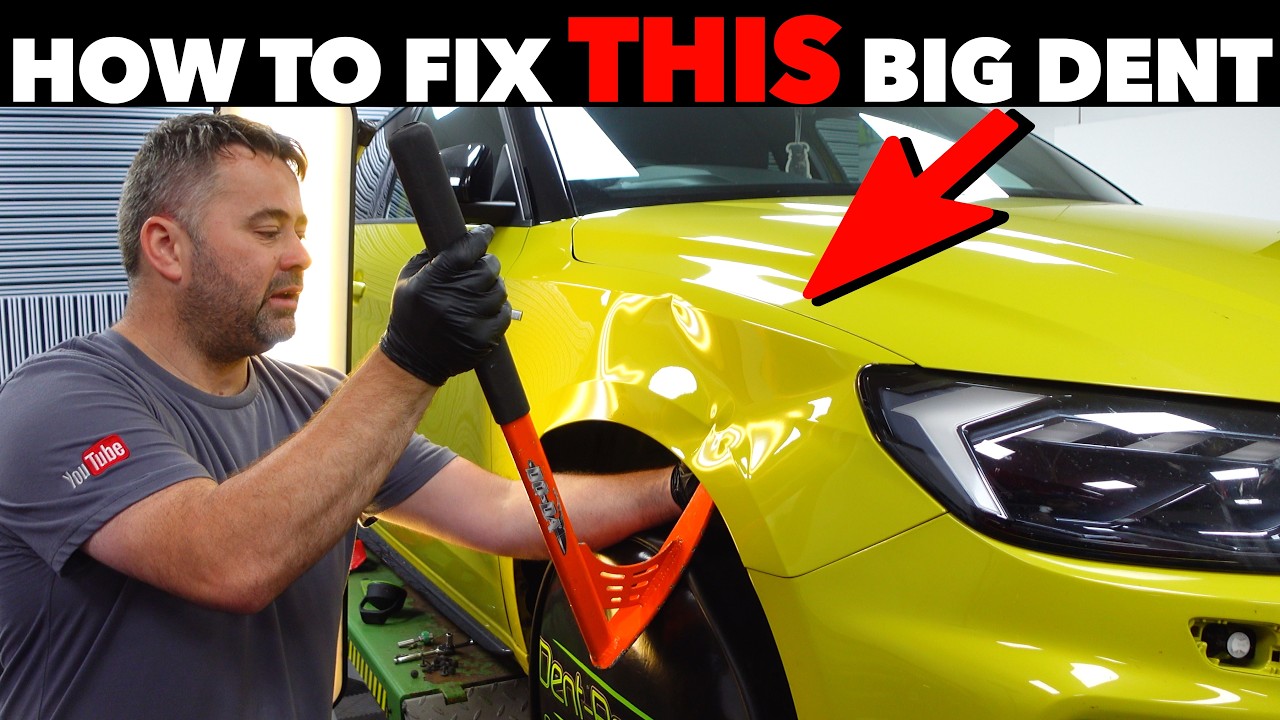
Paintless dent repair, often shortened to PDR, is a method of reshaping damaged metal from behind the panel or, in some cases, pulling it gently from the outside with specialized tabs and adhesives. The key is control. A trained technician works the metal back into its proper contour without breaking the paint.
This is not guesswork and it is not a rough push from behind. Technicians read the panel with reflection boards or lights that reveal subtle highs and lows. Every tool movement is measured. On a shallow crease in a door, for example, the repair may involve dozens or even hundreds of tiny adjustments. The goal is not just to make the dent less visible. The goal is to return the shape so accurately that the repair disappears in normal viewing conditions and, ideally, under shop lighting too.
The method works best when the paint surface is intact and flexible enough to move with the metal. That is why paintless dent repair is commonly used for minor dent repair, door ding repair, hail dent repair, and many forms of non-collision damage. It can also be useful on larger dents if the impact did not stretch the metal too severely.
Why PDR usually saves time
Traditional auto body repair takes time because the process has many stages. Once the damaged area is assessed, the panel may need sanding, filler work, primer, block sanding, paint, blending into adjacent panels, and curing time. If parts need to be removed or replaced, or if the shop is coordinating materials and paint booth scheduling, the timeline expands further.
PDR skips much of that. There is no filler to cure, no primer to sand, no color match to dial in, and no paint booth slot to wait for. If access is straightforward and the dent is a good candidate, same day dent repair is often realistic. A single door ding might take less than an hour. Several hail dents may take longer, sometimes much longer, but the vehicle can still move through the process faster than it would in conventional repair.
This time savings becomes especially noticeable after storms. Hail damage repair through traditional methods can overwhelm local body shops because every affected panel needs refinishing or replacement. Paintless dent repair gives shops and insurance carriers a way to restore many vehicles more efficiently, particularly when the dents are numerous but the paint remains unbroken.
Owners who search for dent repair near me are often dealing with a daily-driver problem rather than a restoration project. They want the vehicle back quickly. They do not want to arrange a rental for a week if the damage is minor. In those cases, mobile dent repair and in-shop PDR can be appealing because they reduce downtime without cutting corners.
The kinds of damage PDR handles well
Some dents almost seem made for PDR. A broad, shallow indentation in a door from another car opening into it is a classic example. So is hail damage spread across the hood, roof, and trunk lid, provided the impacts did not crack the finish. Small to medium dents on fenders and quarter panels often respond well too.
Bumper dent repair is more complicated because many bumpers are plastic, not metal. Traditional paintless dent removal techniques are designed primarily for metal panels. Some bumper damage can be improved with heat and reshaping, but that is not always what shops mean when they advertise PDR. It is worth asking exactly how they handle bumper issues, especially if the paint is scuffed or the plastic is creased.
The same caution applies to scratch and dent repair. A dent with a light surface mark may still be a PDR candidate if the paint is not broken. A dent with deep scratches through the clear coat or color coat is different. In those cases, the metal might be restored with PDR first, then refinished afterward. Shops often call that “push to paint.” It still saves labor compared with full conventional straightening, but it does not preserve the original finish because repainting is still required.
When PDR is not the right answer
The cleanest explanation of PDR vs traditional body work is that PDR is excellent within its lane and limited outside it. If the paint is cracked, split, or missing, paintless dent repair no longer solves the whole problem. If the metal has been sharply crushed, severely stretched, or folded at an edge, a conventional body repair may be the better route. Damage near reinforced braces can be harder to access. Previous repairs also complicate things. Body filler, repainted panels, and weaker aftermarket paint can all raise the risk of failure during repair.
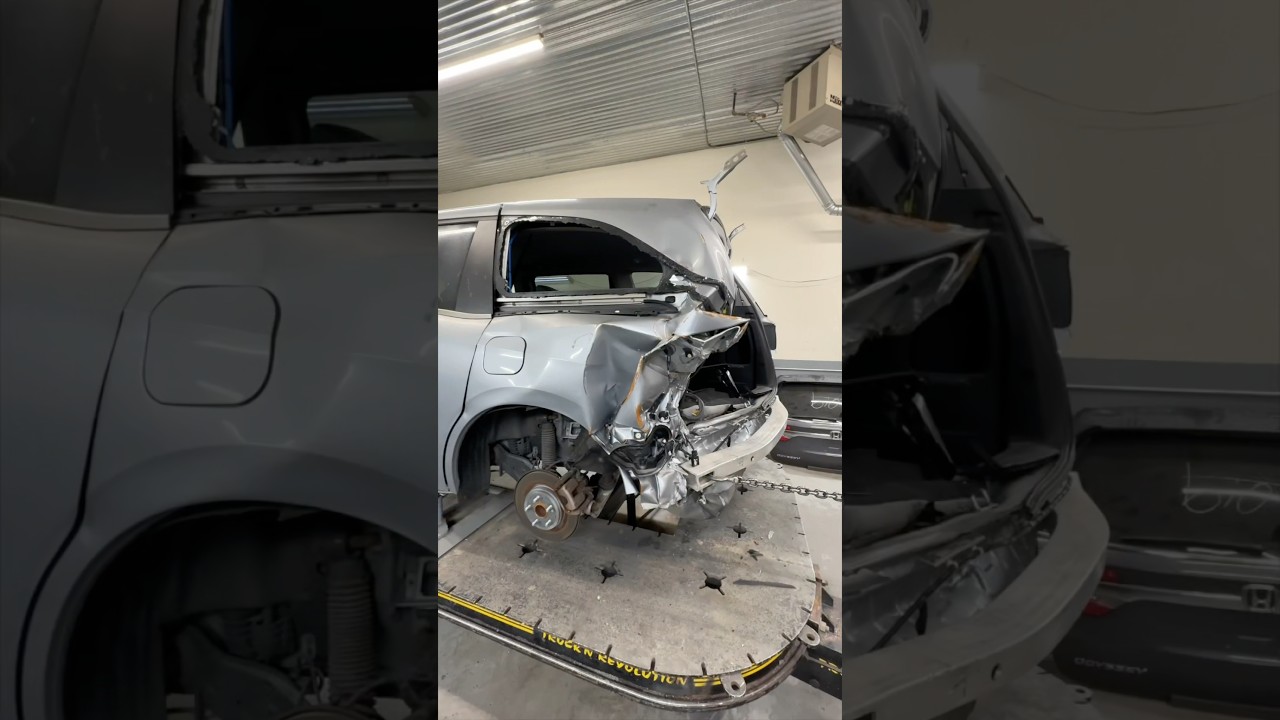
Collision repair is another category entirely. Once the impact involves structural components, safety systems, mounting points, or panel replacement, PDR is not the main solution. A reputable auto body repair facility will say so plainly. One of the easiest ways to spot a trustworthy technician is how quickly they explain when PDR is not appropriate.
I have seen owners disappointed because they expected every dent to vanish perfectly with a quick mobile service. That expectation rarely comes from the technician. It usually comes from online videos that show ideal repairs on ideal dents. Real cars are messier. A good PDR specialist will talk about access, paint condition, metal thickness, bodylines, and realistic outcomes before touching the panel.
Hail damage is where PDR really stands out
Hail dent repair is one of the strongest cases for paintless dent repair. A storm can leave dozens, sometimes hundreds, of impacts across horizontal panels. On a conventional repair estimate, that auto body shop San Francisco amount of refinishing can become expensive fast, and replacing panels adds cost, labor, and downtime. PDR lets the technician address each dent individually while preserving most or all of the original paint.
That is why insurance companies frequently approve PDR for hail damage repair when the damage qualifies. It is typically less invasive, often more cost-effective, and faster than replacing or repainting multiple panels. If you are dealing with a car hail damage insurance claim, the insurer may send an appraiser to inspect the number, size, and location of dents. In many regions, especially after major storms, insurers and repair facilities set up dedicated catastrophe teams because demand rises so sharply.
A common question is does insurance cover paintless dent repair. In many cases, yes, especially under comprehensive coverage for hail or other non-collision events. The exact answer depends on the policy, deductible, and the nature of the damage. If the repair cost is less than or only slightly above the deductible, some owners choose to pay out of pocket. If the vehicle has widespread hail damage, filing a claim often makes sense. The best first step is to get a proper estimate from a qualified shop that handles both PDR and insurance documentation.
What affects dent removal cost
Dent removal cost varies more than people expect because the dent itself is only one part of the equation. Size matters, but it is not the whole story. A small dent on a flat, accessible section of a door can be easier than a slightly smaller dent on a sharp bodyline or near a panel edge. Location, metal thickness, access behind the panel, and whether trim or liners need to come off all influence labor time.
Paintless dent repair cost also changes based on quantity. One door ding may be priced one way, while a hood with fifteen hail dents is priced on a different logic. Shops commonly use matrix pricing for hail events because counting, mapping, and categorizing dozens of dents is more practical than treating each one as an unrelated repair.
Very rough ranges can be helpful, with the usual caution that local labor rates and damage specifics matter. A simple minor dent repair might fall somewhere in the low hundreds. More complex dents on bodylines or larger shallow damage can move higher. A full hail damage repair can range from modest to several thousand dollars depending on panel count and dent volume. If someone quotes a price over the phone without seeing the car, take it as a placeholder, not a promise.
One useful detail for owners: the cheapest quote is not always the best value. PDR is skill-heavy work. A technician with years of experience often produces a cleaner result faster, particularly on difficult metals and modern panel shapes. Saving a little up front is not worth much if the dent still catches your eye every time sunlight hits the side of the car.
Mobile service versus an auto body shop
Mobile dent repair has real advantages. For a straightforward door ding at home or at work, it is hard to beat the convenience. The technician brings lights, rods, glue-pulling equipment, and enough setup to handle many common repairs on site. For busy owners, that can mean no rental, no waiting room, and no disruption to the day.
Still, there are limits. Some repairs need the controlled environment and broader equipment access of an auto body shop. If interior trim, headliners, taillights, or door panels must come off, shop conditions can make the work more efficient and safer. Large hail jobs also tend to go more smoothly in a facility where multiple technicians can work and where the vehicle can stay secure during disassembly and reassembly.
The better question is not whether mobile service is good or bad. It is whether the repair fits the setting. Skilled technicians know the difference and will steer you accordingly.
How to tell if your dent is a good PDR candidate
You do not need expert eyes to make a decent first assessment. Look at the paint first. If there is no crack, chip, or split, that is encouraging. Then look at the dent shape. Broad and shallow is usually better than sharp and pinpointed. Consider location too. A flat section in the middle of a door is usually easier than damage right on a panel edge or next to a heavy brace.
If the car has been repainted in that area before, mention it. Refinished paint can behave differently during repair, especially if glue pulling is involved. Hidden history matters. So does age. Older vehicles may have more brittle paint, though that does not automatically rule out PDR.
Photos help, but they never tell the whole story. Reflection and touch reveal things cameras flatten out. That is why the best estimates often happen in person under proper lighting.
What the repair experience usually looks like
A well-run PDR appointment is refreshingly direct. The technician or estimator inspects the damage, explains whether paintless dent removal is appropriate, gives a price or range, and sets expectations about result and timing. If it is a same day dent repair, the vehicle may be turned around in a few hours. If the job involves hail or multiple panels, it may stay longer.
Once work begins, trim and interior pieces may be removed for access. That surprises some owners, but it is normal. Clean access helps protect the panel and produce a better finish. Throughout the process, the technician uses specialized lighting to monitor the metal’s shape. High spots are tapped down, low spots are raised, and the panel is refined gradually.
When it is done well, the repair looks uneventful, which is the point. There should be no sanding dust, no fresh paint smell, and no concern about blend lines. The vehicle simply looks like the dent was never there.
The trade-off that makes PDR so appealing
Every repair method involves a trade-off. Traditional body work is versatile. It can restore heavily damaged panels, deal with broken paint, and handle severe impact areas that PDR cannot. The trade-off is more time, more materials, and loss of the original finish on the repaired area.
PDR makes the opposite trade. It is selective, not universal, but when the dent qualifies, it protects what is already working: the factory paint, the corrosion protection beneath it, and the visual continuity of the panel. That is why owners of newer vehicles, leased cars, and well-kept daily drivers often favor it. They are not just fixing a dent. They are avoiding a more invasive repair they may not need.
This difference becomes clear when comparing PDR vs traditional body work on the same simple door ding. Conventional repair may still produce an excellent visual result, but it introduces primer, paint, and blending into a problem that started as a metal shape issue only. PDR, when possible, corrects the shape without rewriting the rest of the panel.
Choosing the right technician matters more than the method
Paintless dent repair has grown enough that many shops advertise it, but capability varies. Experience shows up in the details: how honestly the estimate is written, how well the technician explains limits, how cleanly trim is handled, and how the finished panel looks in different light. Reviews can help, but they are not a substitute for a real conversation about the specific dent on your car.
If you are comparing options for car dent repair, ask whether the shop performs PDR in-house or sublets it. Ask whether they handle insurance claims for hail damage repair. Ask what happens if the paint is found to be compromised once the repair starts. None of those questions are confrontational. They are practical, and good shops answer them without hesitation.

The best outcome is not always the fanciest process. Often it is the least invasive one that restores the panel properly and preserves as much of the original vehicle as possible. That is exactly where paintless dent repair earns its reputation. It saves time because it removes unnecessary steps. It helps keep original factory paint because it respects the finish already on the car. For the right dents, that combination is hard to beat.